
Artificial intelligence is advancing at an unstoppable pace and is already transforming the way we work, produce and consume information. However, behind every trained model and every AI-powered digital service there is a factor that is rarely mentioned with the same force: the enormous energy consumption that sustains this technological revolution. What is perceived today as a leap in innovation is also an unprecedented electrical challenge.
In the coming years, the growth in electricity demand from data centres threatens to double. This will put pressure on networks, prices and infrastructure. Furthermore, the United States is positioning itself as the epicentre of this transformation, but the impact will be global. The challenge ranges from increased CO₂ emissions to massive water consumption. Therefore, the great challenge of the next decade will be to find a balance between the potential of AI and the sustainability of the energy systems that power it.
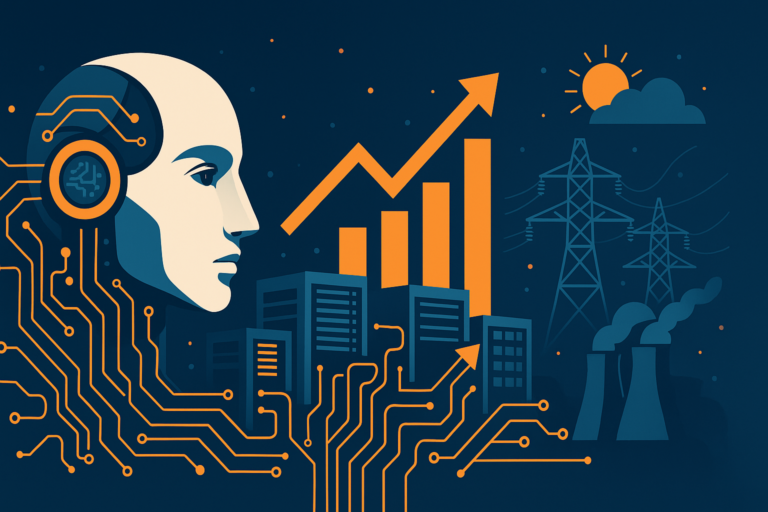
The AI revolution and its impact on energy consumption
According to a report by the International Energy Agency (IEA), global electricity consumption by data centres could double by 2030. The figure would reach 945 TWh, comparable to the annual consumption of entire countries such as Japan. This growth is driven by servers specialised in AI. Such equipment consumes much more energy than traditional equipment and is changing the relationship between digital infrastructure and energy infrastructure.
The United States as the epicentre of energy consumption
Growth is particularly concentrated in the United States, where almost half of the increase in electricity demand is expected to come from AI-powered data centres.
This boom is already having concrete effects:
In the PJM region, the wholesale cost of electricity increased tenfold in just two years.
In Texas, regulations have been passed allowing data centres to be disconnected in critical situations to prevent blackouts.
Therefore, there is a clear need for more robust networks and modern infrastructure that can support technological advances without compromising system stability.
The challenge for infrastructure and energy prices
The rapid expansion of AI poses risks such as:
Saturation of the electricity grid.
Tariff increases due to increased demand.
Greater dependence on carbon-intensive energy sources.
To address this, technology and energy companies are investing in alternatives that guarantee sufficient supply. They are also seeking solutions that reduce environmental impact.
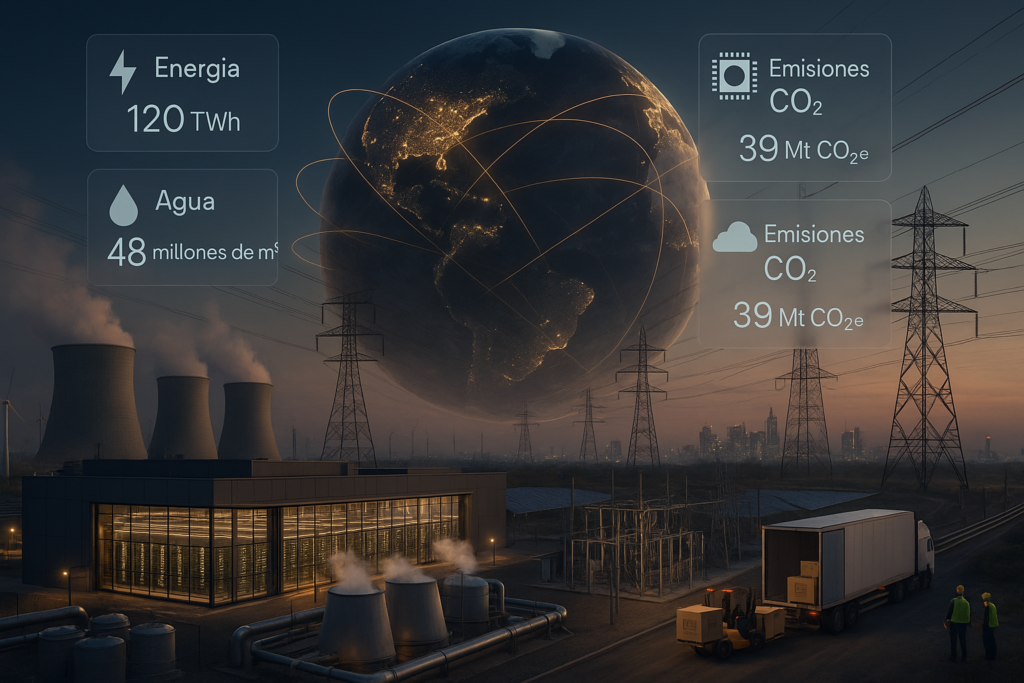
Strategic bets on nuclear, renewables and hybrid models
The main strategic solutions include:
Nuclear energy, with the resurgence of the debate on reactivating iconic power stations such as Three Mile Island.
Renewable energies such as solar and wind power.
Hybrid solutions, such as the Hypergrid project in Texas, which combines nuclear, solar, gas and batteries.
Investment funds such as Silver Lake are already securing gigawatts of capacity in anticipation of growing energy pressure.
Environmental challenges of AI
The growth of data centres not only puts strain on the network, it also impacts the environment:
In 2023, they generated more than 105 million tonnes of CO₂ equivalent.
They have carbon intensities 48% higher than the US national average.
Projected water consumption for 2027 will exceed 6 billion m³. That figure is more than the UK’s annual consumption.
AI as a tool for optimizing the energy transition
Paradoxically, AI itself can become an ally in the energy transition. Its applications allow for:
Optimize electrical grids.
Predict demand peaks.
Improve energy storage.
Increasing the efficiency of renewables.
On the other hand, the real challenge will be balancing technological growth with energy sustainability.
This means ensuring stability, affordability, and reduced environmental impact. In our Elecam blog on energy innovation, we explore how new technologies are transforming the electricity sector and what solutions will shape the future.Want to know more?
Explore our news blog and stay up to date with the latest trends in energy, innovation, and sustainability.
