
For centuries, the shipping industry has relied on the expertise of engineers and crews to maintain a fleet of veritable steel giants. Regular inspections and corrective maintenance have been fundamental pillars of fleet management.
But this raises a number of questions. What if we could anticipate a failure before it happens? What if it were possible to test a ship’s performance in extreme conditions without it ever leaving the shipyard?
This is no longer the stuff of science fiction. The era of the digital twin has arrived, a technology that is revolutionising the way we think about maintenance, efficiency and sustainability in shipping.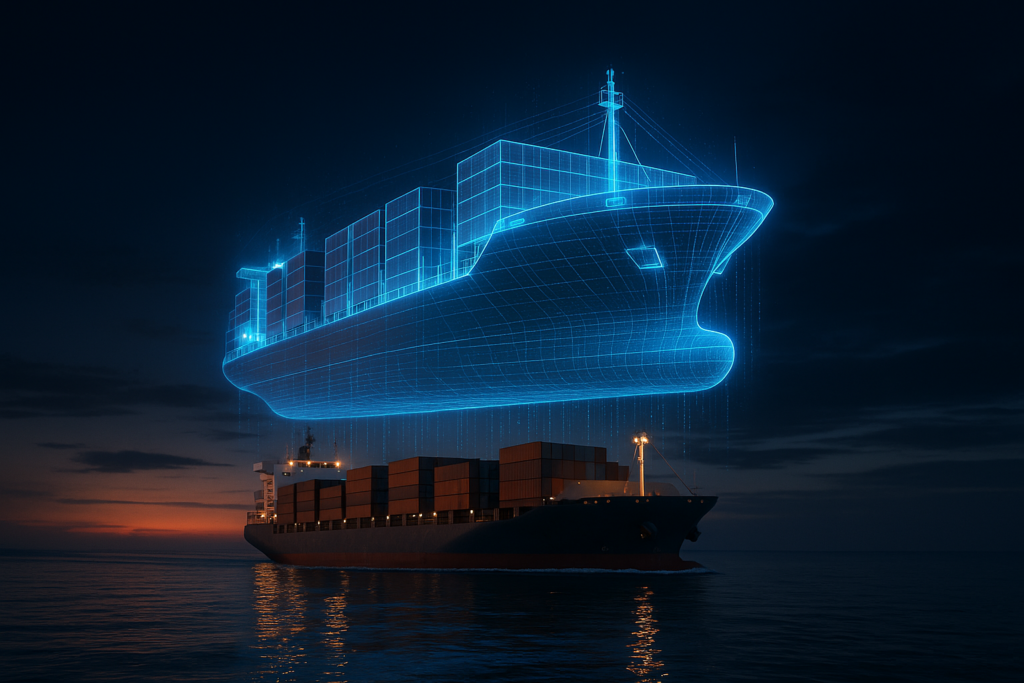
What exactly is a digital twin?
Imagine a virtual replica, an avatar identical in every screw, sensor and system, of a real ship or platform. This digital model is not a simple 3D model; it is a living, dynamic copy. It is fed in real time by miles of data sent by sensors (IoT) installed on its physical counterpart: from the vibration of an engine and the temperature of a generator to the structural fatigue of the hull or fuel consumption.
This constant flow of information allows the digital twin to simulate the status and behaviour of the physical asset with astonishing accuracy. It is a perfect bridge between the physical and virtual worlds, a laboratory where we can test, analyse and predict without putting equipment or people at risk.
According to DNV on digital twins in the maritime industry, this technology has become one of the pillars of the sector’s digital transformation.
Maintenance goes from reactive to predictive
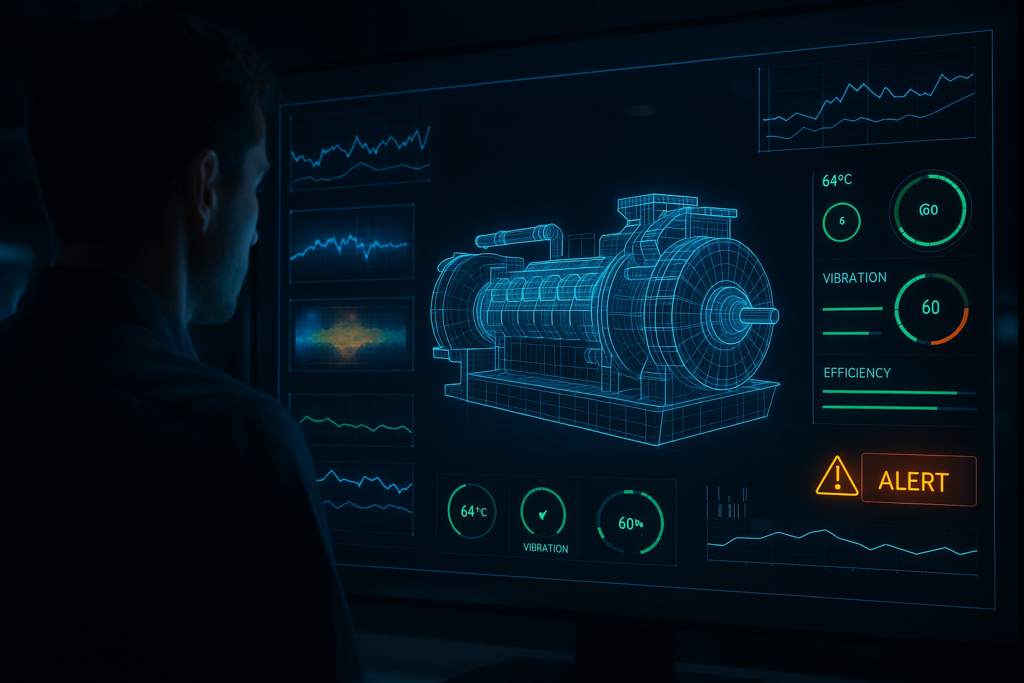
The most immediate and transformative application of the digital twin in the naval sector is undoubtedly maintenance. The paradigm shift is complete.
A real-life example can be found in Navantia and the Spanish Navy, which are developing digital twins for their frigates. These models provide crews with real-time recommendations on system operation, optimising performance and reliability.
From predictive maintenance to operational efficiency
The benefits of the digital twin extend to all ship operations, generating a direct impact on profitability and sustainability.
- Smart routes and fuel savings: The digital twin can simulate entire routes, taking into account weather data, sea currents and the condition of the vessel itself. By testing miles of virtual scenarios, it can recommend the optimal route and speed to minimise fuel consumption, resulting in significant cost savings and a direct reduction in CO₂ emissions.
- ’Crew training and safety: Before undertaking a complex manoeuvre in a busy port or adverse weather conditions, the crew can train in a virtual environment identical to the real thing. This improves the safety and expertise of operators, reducing the risk of accidents.
- Naval design and modernisation: For shipyards, the digital twin is a revolutionary tool. It allows the effect of a new propeller design, the installation of a hybrid propulsion system or the addition of rigid sails (such as the Siport21 case study with LNG vessels) to be tested virtually, optimising the design before cutting the first steel plate.
The challenges of implementing a digital twin
The implementation of this technology is not without its challenges. It requires a considerable initial investment in sensorisation, data processing capacity and cybersecurity to protect the vast amount of sensitive information generated. Furthermore, it demands a cultural shift and the training of specialised teams capable of interpreting the data and making decisions based on it.However, the direction is clear. The naval and offshore industry is facing increasing pressure to become more efficient, safer and more sustainable. The digital twin is not an option, but rather the strategic tool that will enable the fleet of the future to navigate intelligently, anticipate problems and operate with an efficiency that was previously unthinkable. In short, it is the digital co-pilot that every vessel will want to have on board.
Continue discovering more innovations on our Elecam blog
Explore our news blog and keep up to date with the latest trends in energy, innovation and sustainability.
Visit the Elecam blog
